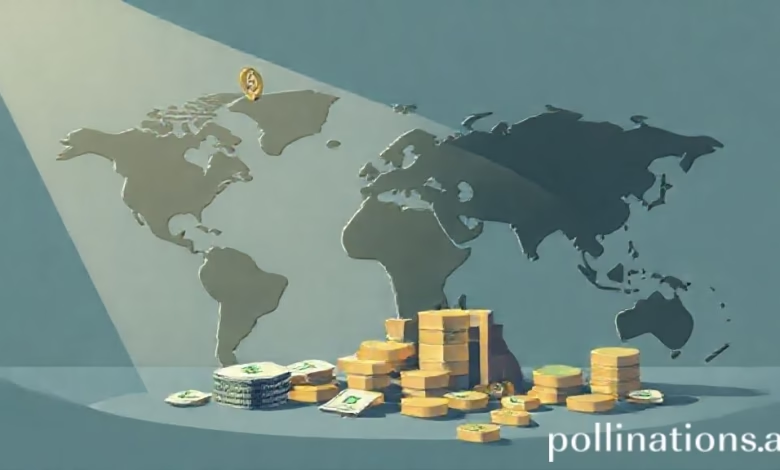
The United States dollar has long been the global currency of choice, serving as the primary unit of exchange for international trade and the pricing mechanism for the world’s critical resources. However, a gradual shift is underway, with China quietly undermining the dollar’s dominance. The consequences of this trend will be far-reaching, with American consumers and businesses facing a decline in purchasing power. As the dollar’s influence wanes, it’s essential to understand the implications and take proactive steps to mitigate the effects.
The Rise of China’s Economic Influence
China’s economic ascent has been a decades-long process, marked by rapid industrialization, strategic investments, and a growing pool of foreign exchange reserves. The country’s Belt and Road Initiative (BRI), a massive infrastructure project aimed at connecting Asia, Europe, and Africa, has further solidified its position as a global economic powerhouse. As China’s economic influence grows, its currency, the renminbi (RMB), is increasingly being used in international trade and transactions.
The Decline of the Dollar’s Monopoly
The dollar’s monopoly on pricing the world’s critical resources is being challenged by the growing use of alternative currencies, such as the RMB and the euro. This shift is driven by a combination of factors, including China’s expanding trade relationships, the increasing use of digital currencies, and the dollar’s own vulnerabilities. As the dollar’s influence wanes, the prices of essential commodities, such as oil, gold, and raw materials, will no longer be pegged to the dollar. This will lead to a decline in American purchasing power, making imports more expensive and reducing the value of the dollar.
The Impact on American Consumers
The decline of the dollar’s global supremacy will have far-reaching consequences for American consumers. Higher import prices will lead to increased costs for essential goods and services, such as food, housing, and healthcare. This will disproportionately affect low- and middle-income households, which will struggle to afford basic necessities. Furthermore, a weaker dollar will also lead to higher prices for American-made goods, making them less competitive in the global market.
Preparation is Key
While the decline of the dollar’s global supremacy is a gradual process, its impact will be felt by American consumers and businesses. To mitigate the effects, it’s essential to take proactive steps, such as:
- Diversifying investments: Consider allocating a portion of your investment portfolio to non-dollar-denominated assets, such as RMB-denominated bonds or international stocks.
- Building an emergency fund: Save 3-6 months’ worth of living expenses in a liquid, dollar-denominated savings account.
- Reducing debt: Pay off high-interest debt, such as credit card balances, to reduce your exposure to a weakening dollar.
- Investing in gold: Consider allocating a portion of your investment portfolio to gold, a safe-haven asset that tends to perform well during periods of economic uncertainty.
What to Watch Next
As the dollar’s influence continues to wane, it’s essential to stay informed about the latest developments and trends. Keep an eye on:
- The growing use of digital currencies: Bitcoin, Ethereum, and other digital currencies are increasingly being used in international transactions.
- China’s continued economic expansion: China’s Belt and Road Initiative and other strategic investments will continue to boost its economic influence.
- The dollar’s response: The US Federal Reserve and other policymakers will need to adapt to the changing global economic landscape, potentially leading to monetary policy changes.
Conclusion
The decline of the dollar’s global supremacy is a gradual process with significant implications for American consumers and businesses. By understanding the trends and taking proactive steps, you can mitigate the effects of a weakening dollar and preserve your purchasing power. Stay informed, diversify your investments, and prepare for a changing global economic landscape.