
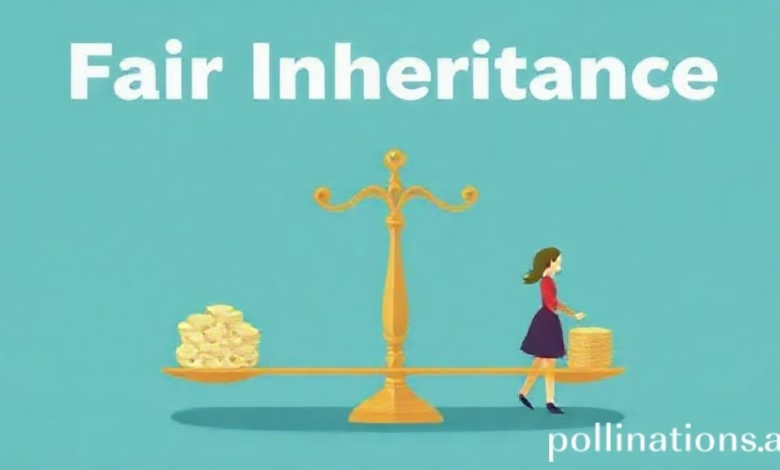
Inheritance laws can be complex, but none as challenging as those involving step-siblings. When a couple with children from previous relationships decides to split their estate, disagreements may arise.
Consider the case of a couple who are splitting their estate equally among his child and her three children. To determine whether equal shares are the fairest option, it’s essential to examine the underlying motivations and the family dynamics involved.
The couple in question has always strived to help all their children, supporting their various endeavors while also encouraging self-sufficiency. This delicate balance can be difficult to maintain, especially when navigating the intricate web of family relationships. In this context, the question of equal shares becomes a pressing concern.
Understanding Fairness
Fairness in inheritance is often subjective and influenced by various factors. Some argue that equal shares are the simplest and most straightforward approach, as it treats all children equally. However, others believe that equal shares may not always be the most equitable solution, particularly when considering the unique circumstances of each child.
In the case of step-siblings, the dynamics can be even more complex. Different family backgrounds, relationships, and financial needs can contribute to an uneven distribution of assets. For example, the step-child may have different financial responsibilities or may require more substantial support due to their unique circumstances.
The Role of Financial Independence
The couple’s emphasis on self-sufficiency is a crucial consideration in determining the fair inheritance. By promoting financial independence, they aim to equip their children with the skills and resources necessary to thrive in life. However, this approach can also create tension when distributing the estate.
If the children are expected to be self-sufficient, it may be more logical to distribute the estate based on their individual financial needs rather than solely on equal shares. This approach acknowledges that each child has different requirements and responsibilities, making equal shares less equitable.
Balancing Family Ties and Financial Realities
Ultimately, the decision to distribute the estate equally among step-siblings depends on the specific circumstances of each family. While equal shares may seem like a straightforward solution, it’s essential to consider the unique dynamics and financial realities of each child.
To navigate this complex issue, it’s recommended that the couple consult with a financial advisor or attorney who can provide expert guidance on inheritance laws and estate distribution. By doing so, they can create a fair and equitable plan that balances family ties with financial realities.
What to Watch Next
As blended families continue to grow, the need for clear guidance on inheritance laws and estate distribution becomes increasingly important. Stay tuned for future articles on this topic, including expert insights on:
- Creating a fair inheritance plan for blended families
- Understanding the tax implications of inheritance
- Navigating the complexities of step-sibling relationships
Conclusion
Distributing an estate equally among step-siblings can be a challenging task, especially when considering the unique dynamics and financial realities of each child. By weighing the importance of fairness, self-sufficiency, and family ties, couples can create a plan that balances their values with the practical needs of their children. As the landscape of family relationships continues to evolve, it’s essential to prioritize open communication and expert guidance when navigating the complexities of inheritance.