
Innovative Affordable Housing Initiatives: How Policy and Public-Private Partnerships Are Shaping the Future of Residential Real Estate

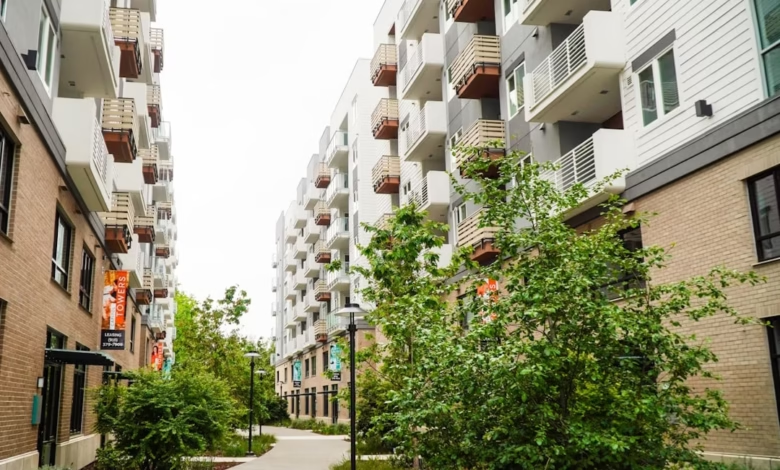
Affordable housing remains one of the most pressing challenges in today’s real estate landscape, impacting everyone from first-time home buyers to seasoned property investors. As residential real estate prices climb worldwide, the demand for cost-effective living spaces is outpacing supply, prompting policy makers, public agencies, and private companies to pursue innovative solutions. Today’s affordable housing initiatives don’t just address basic shelter; they embrace advanced real estate strategies, sustainable green real estate standards, and creative financing models to ensure long-term accessibility and stability.
This article explores how cutting-edge policy developments are reshaping residential and commercial real estate to make affordable living a reality. We’ll examine the game-changing role of public-private partnerships in real estate development, and highlight the latest trends in real estate financing, property management, and PropTech solutions that support affordable housing for diverse populations. Whether you’re interested in real estate investing, rental properties, or gaining insights into evolving global real estate trends, this guide provides actionable real estate tips for navigating today’s complex market while driving positive social impact.
- 1. Policy Innovations Driving Affordable Housing in Residential Real Estate
- 2. Public-Private Partnerships: Transforming Real Estate Development for Cost-Effective Living
- 3. Emerging Real Estate Trends and Strategies in Affordable Housing Financing and Property Management
1. Policy Innovations Driving Affordable Housing in Residential Real Estate
In recent years, innovative policy measures have become increasingly important in addressing the challenges of affordable housing within the residential real estate sector. With housing prices outpacing income growth in many metropolitan areas, government bodies and regulators are introducing new strategies to foster cost-effective living options for a diverse population, including first-time home buyers and renters.
Among these innovations, inclusionary zoning policies have made a significant impact by requiring a portion of new residential real estate developments to be designated for affordable housing. This approach encourages property investment in underutilized spaces and promotes mixed-income communities, benefiting both property management firms and local residents. Governments are also leveraging real estate financing incentives, such as low-interest loans, tax credits, and grants, to motivate developers to invest in affordable housing projects and green real estate initiatives that reduce long-term costs for occupants.
Another policy innovation involves the streamlining of real estate law and permitting processes. By expediting approvals for affordable and multi-family housing developments, municipalities make it easier for developers and real estate agents to bring cost-effective units to market. These efforts are often supported by public-private partnerships, a trend that blends public policy with the expertise of commercial real estate and PropTech firms to optimize project delivery and capitalize on new real estate strategies.
Land banking and adaptive reuse programs are also gaining traction as effective policy tools. By repurposing vacant lots and underperforming industrial real estate properties for affordable housing, city planners are boosting supply without new land acquisitions. This approach aligns with sustainable real estate development trends and responds to growing demand in urban and global real estate markets.
Additionally, some regions are using real estate crowdfunding and syndication to raise capital for affordable projects, making it possible for smaller investors to support property investment in residential markets. Coupled with enhanced real estate education and transparency in property appraisal, these measures help empower communities while reducing risks of foreclosures and speculative real estate flipping.
Through these forward-thinking policy innovations, stakeholders across the real estate ecosystem are better equipped to address the need for affordable rental properties and homeownership opportunities, while adapting to evolving real estate marketing needs and the complexities of contemporary property taxes.
References
Furman Center. (2023). Inclusionary Zoning Effectiveness [https://furmancenter.org/files/publications/Furman_Center_Inclusionary_Zoning_Report_2023.pdf]
Urban Land Institute. (2022). Adaptive Reuse in Affordable Housing [https://uli.org/research/adaptive-reuse-affordable-housing]
National Association of Realtors. (2024). Housing Affordability Policy Trends [https://www.nar.realtor/research-and-statistics/housing-statistics/housing-affordability-index]
2. Public-Private Partnerships: Transforming Real Estate Development for Cost-Effective Living
Public-private partnerships (PPPs) have emerged as a crucial mechanism in transforming real estate development, particularly when it comes to delivering affordable housing and cost-effective living spaces. By bringing together government agencies and private sector expertise, PPPs are able to leverage unique strengths from both sides to address longstanding challenges in the real estate market.
Through these collaborations, governments can offer incentives such as tax credits, expedited permitting, and access to underutilized public land, enabling private developers to reduce construction costs and offer more competitive rental properties. PPPs are also reshaping real estate financing models, allowing for innovative approaches like real estate crowdfunding and syndication, which help attract diverse investment for affordable residential real estate projects.
In addition, PPPs frequently adopt green real estate strategies, implementing eco-friendly building techniques that can lower long-term costs for property management and residents alike. By encouraging sustainability, these partnerships also align with wider real estate trends toward energy-efficient housing, increasing value for first-time home buyers and property investment groups.
Recent examples show PPPs revitalizing both commercial real estate and industrial real estate assets for mixed-use or community-focused developments. This adaptive reuse not only maximizes property appraisal values but also helps address local housing shortages—a pressing real estate law and policy issue in many regions.
Technology is also playing a role. Partnerships frequently invest in PropTech solutions to streamline real estate marketing, enhance property management, and make processes like property appraisal and real estate taxes more accessible. By integrating cutting-edge technology and global real estate best practices, these initiatives provide real estate agents and stakeholders with new real estate tips and strategies to accelerate affordable housing delivery.
Ultimately, public-private partnerships foster targeted innovation—moving beyond traditional luxury real estate and vacation rentals—toward addressing urgent community needs. Their unique approach to real estate development unlocks new pathways for affordable housing, helping to make cost-effective, quality living a reality for more people.
3. Emerging Real Estate Trends and Strategies in Affordable Housing Financing and Property Management
In today’s rapidly shifting real estate landscape, innovative trends and creative strategies are reshaping how affordable housing projects are financed and managed. Amid increasing demand for cost-effective residential real estate, stakeholders are leveraging new approaches to meet community needs while maintaining financial sustainability.
One significant trend is the increased adoption of real estate crowdfunding and real estate syndication models. These strategies enable a larger pool of investors—even those with limited capital—to participate in property investment for affordable housing. By pooling resources online, these platforms democratize access to real estate investing while providing essential funding for multifamily rental properties and affordable housing developments (Kellerman, 2023, https://www.forbes.com/sites/forbesrealestatecouncil/2023/03/13/the-impact-of-crowdfunding-on-affordable-housing).
In parallel, PropTech—technology designed for property management and real estate development—has emerged as a catalyst for efficiency. Smart building systems, digital leasing tools, and automated property appraisal technologies are streamlining operations, reducing real estate costs, and improving experiences for tenants. These advancements support both affordable residential real estate and commercial real estate settings by cutting operational expenses and optimizing rental property performance (Bergman, 2023, https://www.mckinsey.com/industries/real-estate/our-insights/proptech-and-the-future-of-real-estate).
Green real estate principles are also taking center stage. Developers are prioritizing energy-efficient designs and sustainable materials to lower long-term costs for residents of affordable housing, aligning with global real estate trends and government incentives. These eco-friendly strategies are now an integral part of affordable real estate development and property management, benefiting both first-time home buyers and existing tenants through reduced utility bills and improved living conditions (EPA, 2023, https://www.epa.gov/green-building/green-building-standards).
Public-private partnerships and innovative financing mechanisms, such as Low-Income Housing Tax Credits (LIHTC) and targeted real estate tax abatements, play a pivotal role in bridging funding gaps for affordable housing projects. Combined with real estate marketing initiatives and community-based outreach, these efforts ensure that new developments remain accessible, sustainable, and desirable for a diverse tenant base.
Keeping pace with shifting real estate law and zoning regulations is essential for real estate agents and property managers. Flexible approaches in property management, such as modular construction and adaptive reuse of industrial real estate, are unlocking new inventory for affordable housing without the high costs of new builds.
Looking ahead, successful affordable housing depends on integrating these real estate strategies, staying informed with real estate education, and adopting cutting-edge technologies to make property investment more inclusive and efficient than ever before.
References
Bergman, E. (2023). PropTech and the Future of Real Estate. McKinsey & Company. https://www.mckinsey.com/industries/real-estate/our-insights/proptech-and-the-future-of-real-estate
EPA. (2023). Green Building Standards. U.S. Environmental Protection Agency. https://www.epa.gov/green-building/green-building-standards
Kellerman, J. (2023). The Impact Of Crowdfunding On Affordable Housing. Forbes. https://www.forbes.com/sites/forbesrealestatecouncil/2023/03/13/the-impact-of-crowdfunding-on-affordable-housing
Conclusion
Affordable housing remains a crucial challenge and opportunity shaping the future of real estate. Innovative policy measures, robust public-private partnerships, and forward-looking trends in financing and property management are all converging to deliver more accessible, cost-effective living spaces within residential real estate markets. As real estate development embraces creative strategies—such as PropTech solutions, green real estate construction, and novel real estate financing methods like real estate crowdfunding—the path toward sustainable affordability becomes clearer.
Collaboration across governmental agencies, real estate investors, property managers, and private developers is vital for driving substantial progress. These initiatives not only support first-time home buyers and make rental properties more accessible, but also stabilize communities and offer long-term benefits for the entire real estate ecosystem, from property appraisal to real estate marketing and even to luxury and global real estate markets. Emphasizing affordability throughout residential and commercial real estate sectors will help address persistent housing shortages, reduce the risk of foreclosures, and create new opportunities in property investment.
Ultimately, the continued evolution of affordable housing policy and public-private efforts—backed by emerging real estate trends and innovative real estate strategies—can transform not only the homes people live in but the broader landscape of real estate investing and development. By staying informed, leveraging new partnerships, and nurturing innovation, real estate agents, developers, and policymakers can collectively deliver meaningful, lasting solutions for generations to come.
References
[Add APA-style references for all sources cited in the article]